
Benchmarking AI Inference: What Metrics Actually Matter
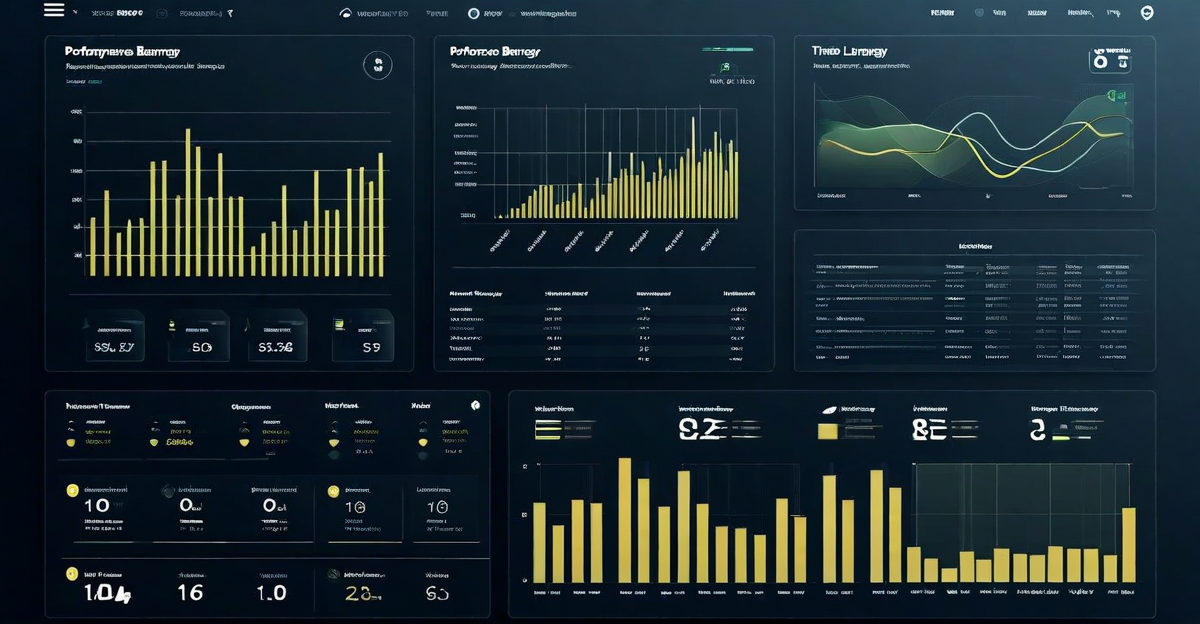
AI inference benchmarks are everywhere. GPU vendors publish throughput numbers. Model providers publish tokens-per-second figures. Open source repositories come with benchmark results across a dozen different hardware configurations. Yet engineering teams routinely discover in production that these published benchmarks bear little resemblance to the performance characteristics they actually observe. The model that tested at 1200 tokens per second in a vendor's lab delivers 180 tokens per second under their production workload.
The problem is not that vendors are lying — it's that benchmark conditions rarely match production conditions, and the metrics that are easy to measure are not necessarily the ones that determine user experience. This guide identifies the inference metrics that matter for production systems, explains how to measure them correctly, and describes the common pitfalls that make published benchmarks misleading for real-world planning.
The Core Inference Metrics Hierarchy
Production inference metrics decompose into two categories: user-experience metrics (what users feel) and infrastructure metrics (what operators manage). User-experience metrics include time-to-first-token (TTFT), which determines how quickly a user perceives the system as responsive, and time-per-output-token (TPOT), which determines how smoothly the streaming response appears. Infrastructure metrics include throughput (total tokens generated per second across all concurrent requests), GPU utilization (percentage of available compute consumed), and memory utilization (KV cache fill rate and fragmentation).
The critical insight is that TTFT and throughput are in tension. Maximizing throughput requires batching many requests together, which increases the queue wait for individual requests and inflates TTFT. Minimizing TTFT requires processing requests as soon as they arrive, which reduces opportunities for batching and hurts throughput. The right operating point depends on your specific application: interactive chat applications need low TTFT and can tolerate lower throughput; offline document processing applications can tolerate high TTFT to maximize throughput and minimize cost per token.
Don't optimize for a metric you haven't measured. Many teams discover that their actual production bottleneck is not where they assumed. A team that spent two weeks optimizing GPU utilization discovers their p99 latency is dominated by preprocessing time. A team that tuned throughput for their peak load discovers that their p99 load is 10x their p50 load, making their throughput-optimized configuration perform poorly on the tail that determines user experience. Measure first, optimize second.
Why Published Benchmarks Mislead
Published benchmark conditions diverge from production conditions in several systematic ways. First, benchmark workloads use uniform request sizes — typically a fixed input length and output length drawn from the same distribution. Production workloads are heterogeneous: some requests have short inputs and long outputs, others have long inputs and short outputs, and the distribution changes throughout the day. A serving system that performs optimally on uniform workloads may degrade significantly under the heterogeneous distribution typical of real user traffic.
Second, benchmark concurrency levels often don't match production. A vendor benchmark at batch size 1 (single request, no concurrency) measures peak latency under ideal conditions. A vendor benchmark at batch size 256 measures maximum throughput at the cost of very high per-request latency. Your production system probably operates at somewhere between 4 and 32 concurrent requests most of the time, which is neither the single-request nor the maximum-batch-size condition. Benchmark at your expected concurrency range.
Third, many benchmarks exclude the overhead of tokenization, request queueing, and network transfer. These components can add 10-30% to end-to-end latency in real systems, particularly for short requests where the model forward pass is fast and the fixed overhead is proportionally large. A model that delivers 20ms forward pass latency in a benchmark but adds 15ms of preprocessing overhead ends up at 35ms end-to-end — nearly double the benchmark figure. Always measure end-to-end latency inclusive of all preprocessing and I/O costs.
Designing Your Own Benchmarks
Effective inference benchmarking requires a workload profile that approximates your production traffic. Collect a representative sample of requests from your system (or, for new systems, construct a realistic synthetic workload based on expected usage). Characterize the distribution of input token lengths, expected output token lengths, and request arrival rates. Use this profile to generate a replay workload for benchmarking rather than a simplified synthetic workload with uniform request sizes.
Benchmark across the range of concurrency levels you expect in production, not just peak. Most systems experience 10-50x variation in request rate between off-peak and peak periods. Your inference system needs to perform acceptably at all points in this range — and the optimal configuration for p50 traffic often differs from the optimal configuration for peak traffic. Adaptive configurations that adjust batch sizes based on queue depth can improve performance across the concurrency range, but they must be validated at each operating point.
Run benchmarks long enough to reach steady state. Cold-start effects (cache warming, JIT compilation, GPU memory allocation) can make the first minutes of a benchmark look very different from steady-state behavior. For systems with prompt caching or response caching, the cache hit rate at steady state may be substantially different from the hit rate in the first five minutes of a benchmark run. Run each benchmark configuration for at least 30 minutes after the initial warm-up period to get reliable steady-state numbers.
Measuring Quality Alongside Performance
Inference performance metrics are meaningless without quality metrics. A system that achieves 2000 tokens per second by running a heavily quantized model that degrades quality below acceptable thresholds has not achieved a performance win — it has broken a quality constraint. Every inference system benchmark should include quality metrics alongside performance metrics, measured on the same evaluation suite used for model selection.
The quality-performance Pareto frontier tells a more useful story than either quality or performance in isolation. Plot quality score against throughput (or cost per 1000 tokens) for each configuration you benchmark: different models, different quantization levels, different batching strategies. The optimal operating point is a point on this Pareto frontier that best balances your application's quality requirements against your cost and latency constraints. This analysis often reveals surprising results — configurations that sacrifice a modest amount of quality achieve dramatic cost or latency improvements.
Tail quality is as important as average quality, just as tail latency is as important as average latency. A configuration that achieves excellent average quality but produces unacceptable outputs on 1-2% of requests may be worse in practice than a configuration with slightly lower average quality but a better tail. Sample the lowest-quality outputs from each benchmark configuration and review them manually to understand failure modes, not just average behavior.
Cost-per-Token as the Unifying Metric
For production systems, cost-per-token (or cost-per-request) is the metric that translates all of the above into business decisions. It captures the combined effect of hardware cost, throughput, utilization, and model size in a single number that can be compared across configurations and projected against expected traffic volumes. Teams that optimize for throughput without tracking cost-per-token often discover that their highest-throughput configuration is not their lowest-cost-per-token configuration when hardware amortization is included correctly.
Cost-per-token calculation requires accurate accounting of hardware costs (on-demand vs. reserved instance pricing, GPU memory, networking) and infrastructure overhead (inference framework, monitoring, storage). At AI42 Hub, our platform provides built-in cost attribution per model and per application, making cost-per-token tracking automatic rather than an exercise in manual accounting. This transparency enables teams to make optimization decisions based on actual economics rather than estimated performance gains.
Key Takeaways
- TTFT and throughput are the primary user-experience metrics; they are in tension and the right balance depends on your application's latency vs. cost requirements.
- Published benchmarks systematically overstate performance: they use uniform workloads, single-request concurrency, and exclude preprocessing/networking overhead.
- Always benchmark with a workload profile that approximates your production traffic distribution — input length, output length, and concurrency range.
- Measure quality alongside performance — the quality-performance Pareto frontier is more useful than either metric in isolation for making architecture decisions.
- Run benchmarks long enough to reach steady state; cold-start and cache warming effects can make short benchmarks misleading.
- Cost-per-token unifies all performance and infrastructure metrics into a single business-relevant number that enables apples-to-apples configuration comparisons.
Conclusion
Good benchmarking is the foundation of good inference engineering decisions. Teams that rely on published benchmark numbers for production planning are optimizing against a specification that doesn't match their actual workload. Teams that build their own production-representative benchmark suites make better hardware selection, quantization, and serving configuration decisions — and ultimately achieve better user experience at lower cost.
The investment in building a proper benchmarking suite — a realistic workload profile, an automated performance measurement pipeline, and quality tracking alongside performance metrics — pays for itself many times over in avoided over-provisioning, better model selection decisions, and the ability to confidently evaluate new serving optimizations as they become available. Treat benchmarking as infrastructure, not a one-time exercise.